Please Just Let Robin Hood Die
The leader of the Merry Men gets the gritty grimdark treatment, whether we like it or not.

This review contains spoilers.
Does anyone really care about Robin Hood? I rolled the question around in my mind during The Death of Robin Hood's meandering two-hour anti-adventure. With wealth inequality enjoyers celebrating Elon Musk becoming the world's first trillionaire, surely there's never been a better time for another look at the man who stole from the rich to give to the poor. But The Death of Robin Hood is at pains to tell us that the leader of the Merry Men wasn't a good guy, in fact he was a pretty terrible guy, and don't you forget it—even as Robin himself (Hugh Jackman), aged and weary, confuses his life's events with the myths.
It's been more than 50 years since Disney turned Robin Hood into a sexy fox, and over 30 since Men in Tights. He's been American and French and a Black woman and an Indigenous boy. Jackman's Hood speaks with an East Midlands growl that sounds decent to my Australian ears (if nothing else, his natural accent barely peeks through), his mud-caked appearance tired and rough. Running from countless enemies and trapped in the shadow of his own overblown legend, Robin Hood longs for death, yet still can't help himself from brutally murdering anyone who tries to deal it to him. As Hood himself explains to one such would-be killer, his reputation as a defender of the meek is attributable to the power of storytelling rather than any basis in fact. But along with the majority of the well-known Robin Hood characters or tales, the power of storytelling is nowhere to be found in this draining, confused drama.
The only other familiar name from the old stories, Little John (Bill Skarsgård)—now going by 'Edward', a man whose identity he stole in order to escape his own murderous past and settle down—seeks Robin's help reclaiming 'his' homestead from some old enemies. The brutal fighting ends with Robin badly injured, and Little John dumps him at an isolated priory overseen by the dutiful Sister Brigid (Jodie Comer). Unaware of Robin's true identity, Brigid's care sees him back on his feet and helping with the commune's rabbit traps, but Robin can't bring himself to accept the peaceful second chance he's been gifted. Various tensions and threats float near and far through The Death of Robin Hood, but just as Robin himself is hazy on what's true and what's not, the film is murky and unclear, without any consistent driving force or emotional throughline beside Hood's guilt-ridden grumpiness.
Early on, Robin teaches Little John how to construct a pleasing simile. Little John's attempt to describe his wife Margaret's hair as "red as fresh blood" is workshopped into "red as the setting sun", then punched up by Robin as "the setting summer sun". This description is returned to throughout, but the film itself is less interested in the beauty and poetry of colour. When Robin's blood is repeatedly medically drained, the room is so dark that it often just appears black. Action scenes are almost exclusively staged at night, and while the fire-lit knife-stabbing and sword-swinging is evocative, it's also mostly shades of brown. Much is made of Little John's daughter's hair*, red like her mother's, but thematically it does little beyond reminding us of Brave or Game of Thrones or even Poldark.
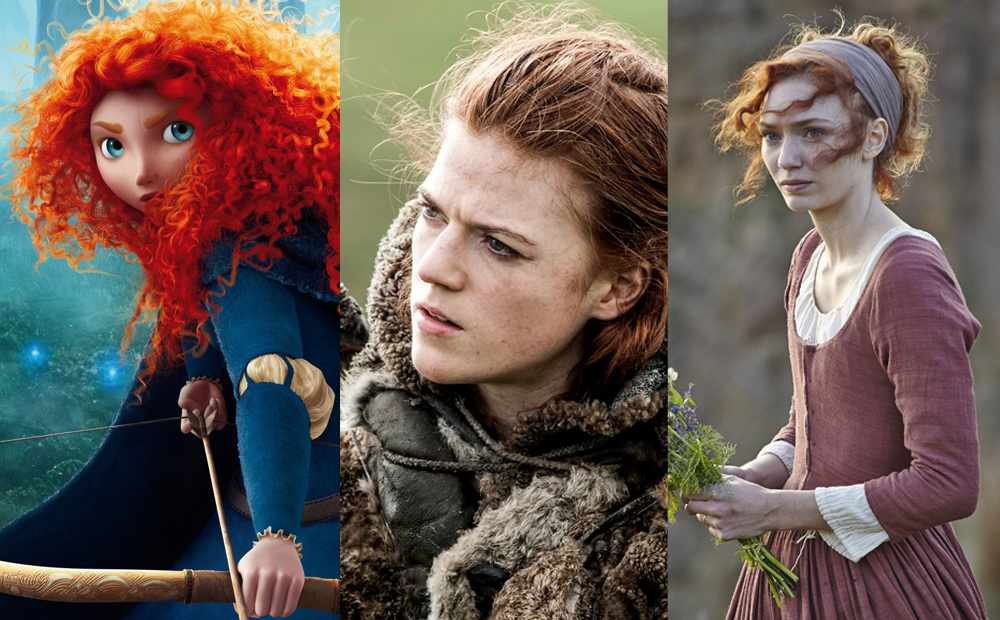
*And honestly not enough is made of Brigid's hair, or rather the hideous bob wig that Jodie Comer is stuck in from midway through, wisely absent from all the promotional imagery. Girl, put your hat back on!
In a more conventionally plotted drama, the tension between the pious yet conflicted Brigid and the irredeemable sinner Robin could easily make up the emotional bulk of the story. Instead, when Brigid learns Robin's true identity—that she's been caring for the very man responsible for a great tragedy in her life—her acceptance of him is the very next scene following his confession. Introducing that tension only to instantly dissolve it is ludicrous in a story so slow and drawn-out.
The Death of Robin Hood's central thesis—insisted upon by Robin to anyone who'll listen—is don't believe those stories you heard, it's all lies upon lies, Robin Hood is no hero. Yet even as the film attempts to explore other definitions of strength like Brigid's steadfast care, or the folly in continuing the cycle of violence, it can't help but revel in its moments of aggression and gore. Whether it's blood spatter on the lens from someone getting their head cracked in or the thunk of a knife driven through someone's temple, the terrible, awful murders Robin Hood feels really bad about sure do look and sound great. Obviously it's totally wrong for Robin to shoot a small boy through the head with an arrow, but wasn't it a bit fucking cool, too?
The idea that violent cruelty is somehow more 'real' is the biggest lie of all. Grimdark gritty retelling is romanticising. It romanticises the powerful man who's done bad things and feels bad about them. It romanticises savage ultraviolence, in awe of those who are capable of it. But perhaps what's most tiresome is that post-Game of Thrones this type of medieval murderousness simply feels a bit played out. The film goes so far in its disavowal of the Merry Men's wealth redistribution derring-do that Jackman's character may as well not be called Robin Hood at all. Who, then, really cares about this? By the time The Death of Robin Hood finally delivered on its title, I was still no closer to an answer.